


Balam Balam Place, Brunswick
Designing for connection: Creating flexible spaces with lasting impact
From the outset, the project was defined by a mix of uses that needed to sit comfortably together. The brief brought together gallery space, maternal and child health services, and creative studios, each with very different requirements, rhythms, and levels of privacy.
“The brief was to accommodate three things: Black Dot Gallery, a maternal and child health facility… and creative spaces that could be leased to the community,” says Rachel Nolan, principal, Kennedy Nolan.

Rather than resolving this through a single, dominant building, the design spreads activity across the site. A series of structures sit within a shared landscape, allowing people to move freely between uses while maintaining a sense of openness. “Balam Balam Place is almost like a campus scattered through a public park,” she explains. “There are beautiful trees, open spaces for ceremonies, and a variety of buildings for creative and cultural activities. The site is designed as an invitation for the community to explore, play, and gather.”
This approach builds directly on what was already happening on site. When the team first arrived, existing buildings were being used in informal but meaningful ways. “Black Dot Gallery was operating in an old garage, and ‘These Are the Projects We Do Together’ was running creative spaces in the old school building,” explains Nolan. Rather than clearing these uses, the project supports and expands them.


The site’s history also plays a visible role in shaping the outcome. Elements from different periods — including the original 1880s residence — are retained and repositioned within the new landscape. “We loved the soul of the place. People were already making the most of the buildings, but we saw potential to enhance the site with better facilities,” says Nolan. This balance between retention and renewal gives the project a sense of continuity while allowing it to evolve.
Design decisions follow this same thinking. Heritage buildings are reframed through planting and open space, while new structures are positioned to support movement and activity across the site. “The buildings aren’t the hero—they support the green spaces and public areas,” she says.

A new five-storey building introduces a more prominent element, but its role is still tied to the broader composition. “The… building is slightly playful, a ‘friendly giant,’ overseeing the site while connecting with the park and surrounding community,” explains Nolan.
Around it, smaller-scale elements and retained structures help maintain a more approachable, human scale.


Performance is considered alongside experience. Orientation, overhangs, and openings are used to manage sunlight and comfort, while also reinforcing how different spaces are used. “Form and function were closely balanced: they take advantage of the northern aspect, provide shading, and act as landmarks while also offering separate identities for the different community uses,” says Nolan.
At the same time, the project avoids feeling institutional. Planning is guided by a more familiar, domestic logic, helping to bring together very different user groups. “We approached it almost like designing a large house,” she says. Material choices reinforce this, with recycled brick, lightweight cladding, and warm interior finishes creating spaces that feel comfortable and lived-in rather than formal.

Selecting Sun Shading
Natural light was a key consideration in the design of Balam Balam Place, with the site’s northern aspect dictating building placement, eaves, and window orientation.
“The buildings maximise sunlight for internal comfort, long views, and park visibility, while also providing shading where necessary,” says Nolan. To complement these passive solar strategies, the team incorporated flexible solutions for areas with variable use.
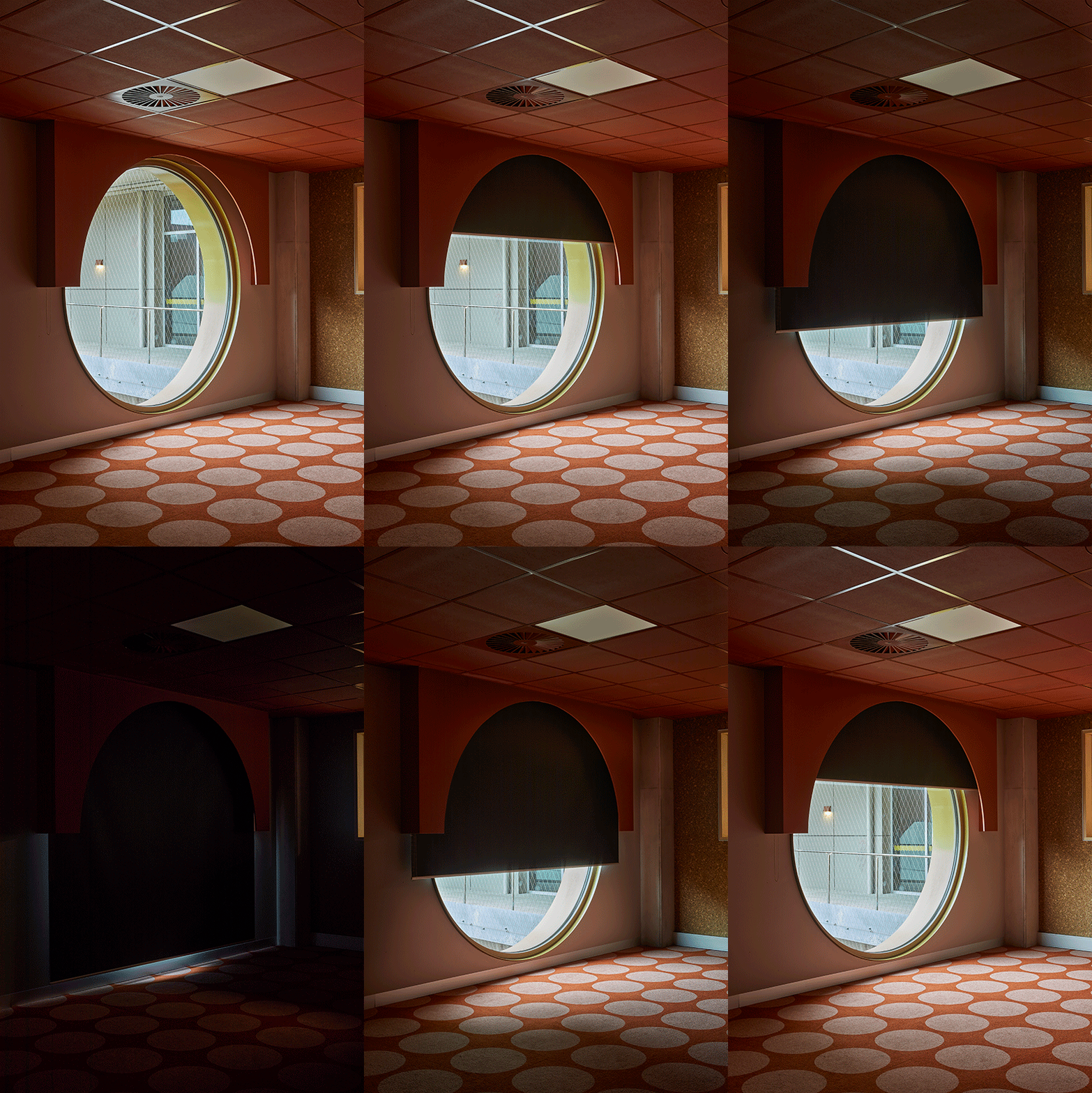
For the circular windows, internal roller blinds were installed, described by Nolan as functioning like “eyelids”, allowing precise control over light and privacy. The same system was integrated within the east-facing windows of the Merri-Bek City Council's Maternal and Child Health Services area and the large flexible hire rooms, where morning sun can introduce glare. The manually operated blinds are finished in Raven, a 100% blockout charcoal fabric.


On the east elevation, three large motorised vertical awnings to the Black Dot Gallery provide an additional layer of adaptability. Each external fabric screen is 3 metres wide and guided by discreet cables, creating a minimal visual profile when deployed. Programmed as a group, the three awnings operate in unison via a Warema WMS handheld remote, allowing the façade to be quickly opened or enclosed as required. Warema SecuTex in 44502, a dark grey glass fibre fabric with a silicone coating, was specified for the external awnings. Developed by Warema, it is classified as non-flammable (building materials class A2) in accordance with DIN 4102-1.
“They’re external, German-engineered Warema blinds, and they give the space flexibility—letting the gallery open fully to the street or close down as needed. They integrate seamlessly with the building and respond to the public use of the space,” explains Nolan.
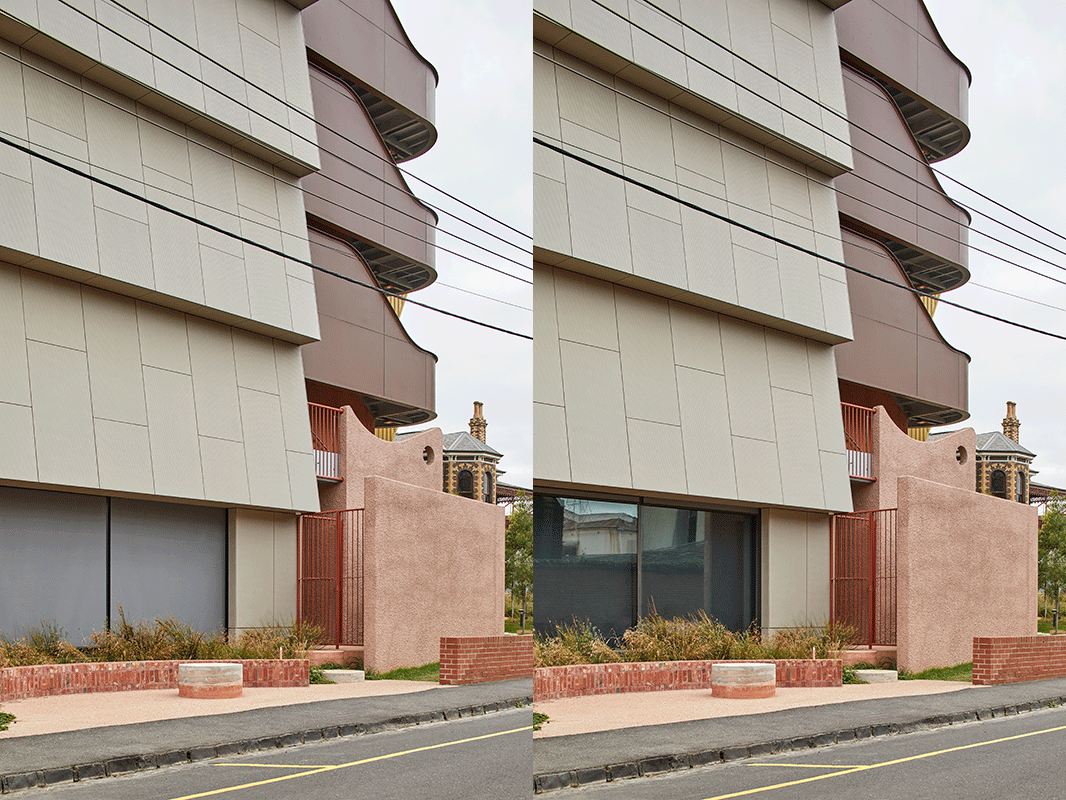

The shading systems are integrated into the architecture, supporting both function and visual cohesion. “They feel natural in the building, as if they belong,” Nolan says.
Durability was also a priority: “We’ve had a long-standing relationship with Shade Factor. We know their products are high quality, reliable, and durable, which is really important for a building with high public use.”


These solutions allow the site to accommodate a wide range of activities without compromising comfort or openness. Reflecting on the space’s success, Nolan says: “It’s been wonderful to see. People are engaging with every part of the site. The Steps, the balconies, the park, and the galleries are all active, creative, and used in ways that make the site feel optimistic and alive for the community.”

Victoria
+61 3 9558 3009
Boonwurrung Country
6 Plane Tree Avenue
Dingley Village VIC 3172
New South Wales
+61 2 9136 6090
Kuring-gai Country
7A Green Street
Brookvale NSW 2100

Shade Factor is proud to be the exclusive agents of Warema and Caravita in Australia and engages in projects all around the world.